Live Rooms, Zoom Rooms: Where Relationships Actually Start in 2026
You have a business to run, a calendar that is already crowded, and more ways than ever to meet people without leaving your desk. So where should you spend your networking time: at a live event or in a virtual room?
Here’s the blunt answer: start relationships live; maintain them virtually.
A Zoom call can deepen a relationship you’ve already begun. It can help you stay visible, follow through, and connect across distance. But starting trust from zero through a gallery view is harder. You can see someone’s face. You can’t feel the room, catch the small signals, or share the moment that gives you a natural reason to reconnect.
That distinction matters if you’re a small business owner, franchise owner, or sales professional trying to turn networking into real opportunities, not just more screen time.
AI can send the invitation. It can’t be in the room for you.
In 2026, AI can help draft a message, summarize a meeting, and fill your calendar. Useful? Absolutely. But when information and polished introductions are everywhere, your presence becomes more valuable, not less.
Presence is the little human stuff: how someone reacts when you ask a question, the pause before they tell you what’s really challenging them, the conversation that continues after the agenda ends. It’s the shared experience of being in the same place, at the same time.
That does not make virtual networking pointless. It means each format has a different job.
What live rooms give you
You can read the room
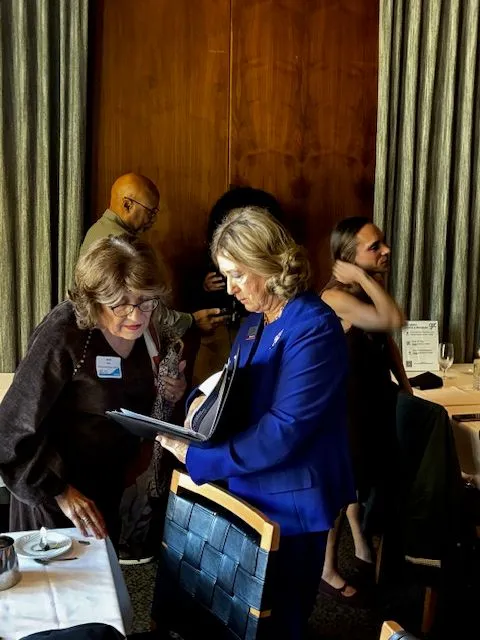
At a live event, you notice who is engaged, who is looking for a way into a conversation, and when a discussion is ready to move beyond introductions. You can respond to a smile, a change in tone, or a thoughtful question without waiting for someone to unmute.
Those cues help you judge when to listen, when to contribute, and when there may be enough common ground to suggest a one-to-one.
You can find the moment to ask
The agenda has ended. You and another attendee are comparing notes. Someone mentions a challenge you know well. That’s a natural opening to say, “I’d enjoy continuing this conversation. Would you be open to meeting next week?”
Online, that moment can be harder to spot. The host wraps up, the screen fills with goodbye waves, and everyone vanishes into their next meeting. A warm conversation can end with the digital equivalent of walking into a closing elevator.
Other people can connect you
In a live room, someone may say, “You two should meet.” A host can introduce you. A person you’ve just met may spot a shared interest and bridge the gap.
That spontaneous introduction matters. It gives you context and a reason to trust the connection enough to begin a conversation. Virtual events can make introductions too, but they often need more planning, and a host willing to do the work.
You leave with a shared reference point
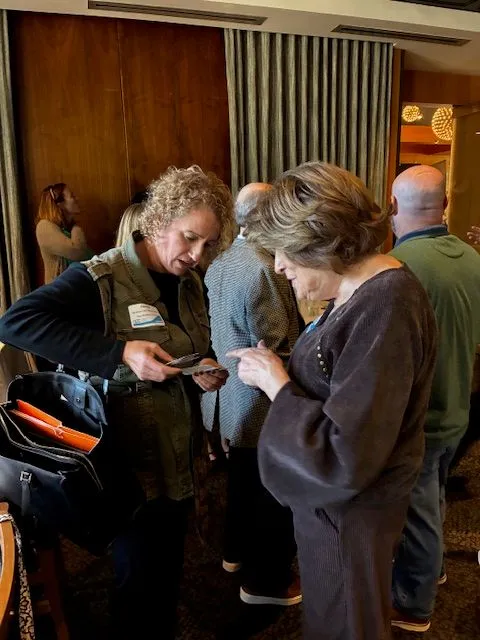
You both remember the event, the speaker who surprised everyone, or the conversation beside the coffee table. That shared experience gives you an easy opening for a follow-up: “I’ve been thinking about what you said after the session.”
Research reported by PCMA on live experiences in 2026 found that, among surveyed event professionals, face-to-face networking conversations ranked as the top trust-building element. That is not proof that every live event is worthwhile. It is a reminder that being together creates useful conditions for connection.
What virtual rooms do better
Virtual networking deserves a fair hearing. A well-run online conversation can be useful, personal, and a lot easier to fit into a busy week.
Maintain relationships you’ve already started
A short video call can help you stay in touch with a referral partner, check in with a client, or continue a conversation after an event. You don’t have to travel across town to keep a good relationship warm.
Connect across distance
Your next valuable contact may be in another city, or another region of your franchise system. Virtual meetings make it practical to connect with people you might never encounter in a local room.
Make follow-up easier
You met someone at an event and agreed to talk again? A virtual one-to-one can be the right next step. You can focus on the conversation, compare notes, and decide whether there’s a useful way to support each other.
For a structure that turns a promising introduction into a more focused conversation, read The One-to-One Meeting That Turns a Stranger Into a Referral Source.
Practice without making every interaction high stakes
A virtual networking session can give you useful practice: introducing your business clearly, asking better questions, and listening for what matters to the other person. Think of it as a rehearsal space, not a replacement for every live conversation.
And yes, virtual rooms let you reach people you might never get in front of otherwise. That is a real advantage. Just don’t confuse access with trust. Being able to join someone’s meeting is not the same as having built a relationship with them.
The rule: start live, maintain virtually
If you can meet in person and the relationship matters, consider making that the first conversation. Then use virtual meetings to keep momentum going.
This is not a rule against Zoom. It is a rule against expecting the platform to do the relationship-building for you.
A live event is not automatically effective. You still need to arrive with a reason to be there, have purposeful conversations, and agree on a next step. Our article on Netsocializing: Why You Need a Plan Before You Walk In can help you make the room count.

If the room is virtual, make it count
Sometimes the virtual room is the only room. You can still create the conditions for a better conversation.
- Turn your camera on when you can. Make it easier for others to see and respond to you.
- Arrive early. Use the unhurried minutes before the agenda to exchange a few words with the host or another attendee.
- Ask a real question. Contribute in the chat or out loud. Go beyond “Can everyone see my screen?”
- Listen for a specific point of connection. What challenge, goal, or interest did the other person mention?
- Suggest a clear next step. If there’s a fit, ask about a one-to-one and offer a couple of possible times.
Try: “You mentioned you’re working on improving referrals across your locations. I’d be interested in hearing more. Would a short one-to-one next week be useful?”
That’s better than “Let’s stay in touch.” Nobody has ever found a time in their calendar called Stay in Touch.
Audit your calendar, and your pipeline
Look at your recent networking activity. How much of it happened online? More importantly, how many of those virtual conversations came from relationships you had already started?
If most of your “networking” is virtual and your pipeline is thin, you may be maintaining a network you never actually built. That is not a character flaw. It is useful information about where to put your effort next.
Review your calendar and ask:
- Are you meeting people who connect with your business goals?
- Do your online conversations lead to specific one-to-ones or follow-up?
- Are you making room for live events where you can build new relationships?
- Do you know what you want to accomplish before you walk in, or log on?
You don’t need to attend every event or accept every invitation. Choose live rooms with intention, then use virtual conversations to stay connected and move promising relationships forward. That’s strategic networking: matching the format to the job.
Put presence to work for your business
You don’t need to be the loudest person in the room or the most animated square on screen. You need a clear purpose, genuine curiosity, and the confidence to ask for a next step when the conversation earns one.
If you want a more repeatable approach, professional networking skills coaching can help you prepare for stronger conversations, build relationships with intention, and turn follow-through into a business habit, not another task you keep meaning to get around to.
Book a coaching conversation or explore Branch Consulting Group’s coaching and training options. Let’s help you spend your networking time where it can build trust, unlock opportunities, grow sales, and support profitability.